
Root canal treatment under the microscope in Cluj
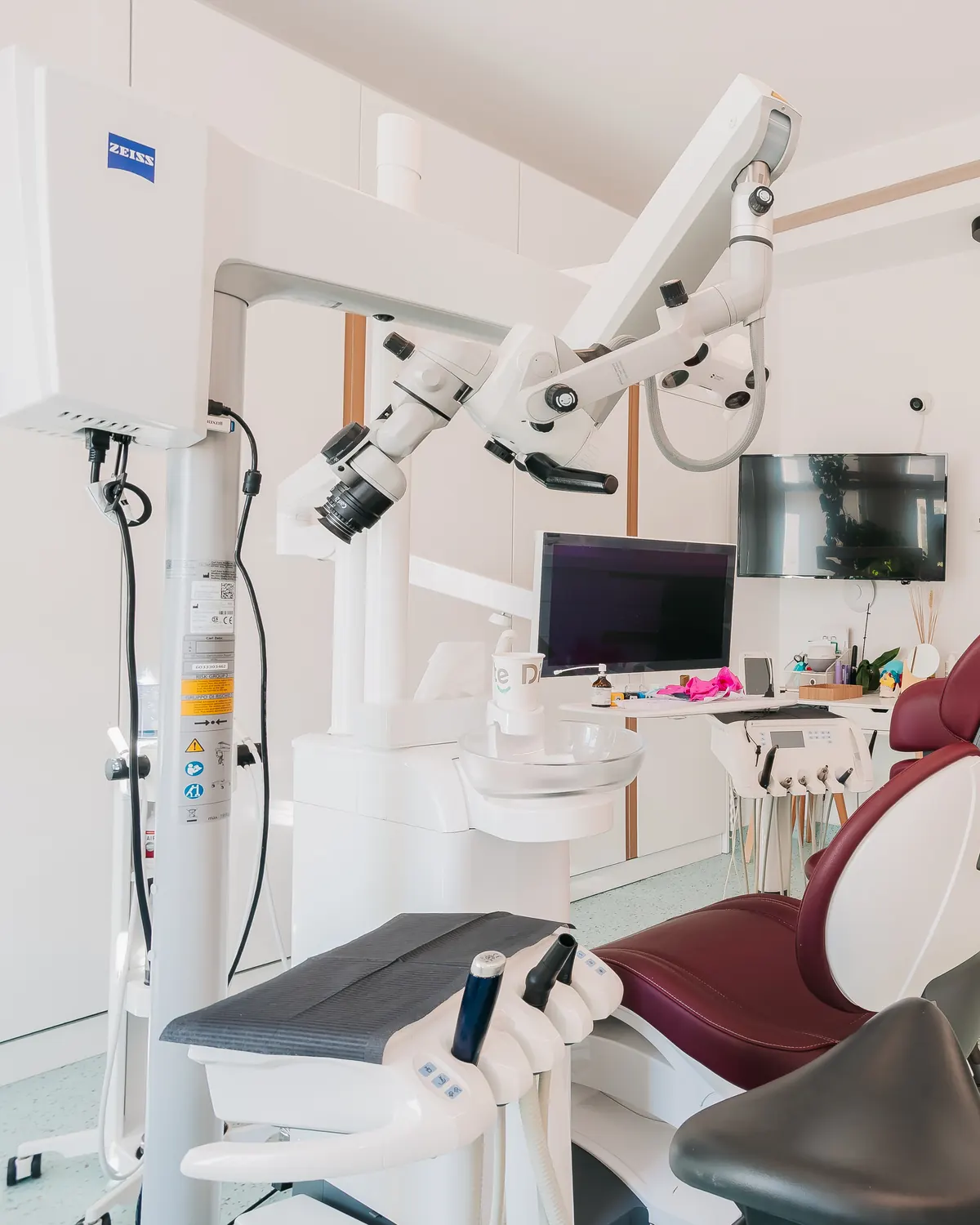
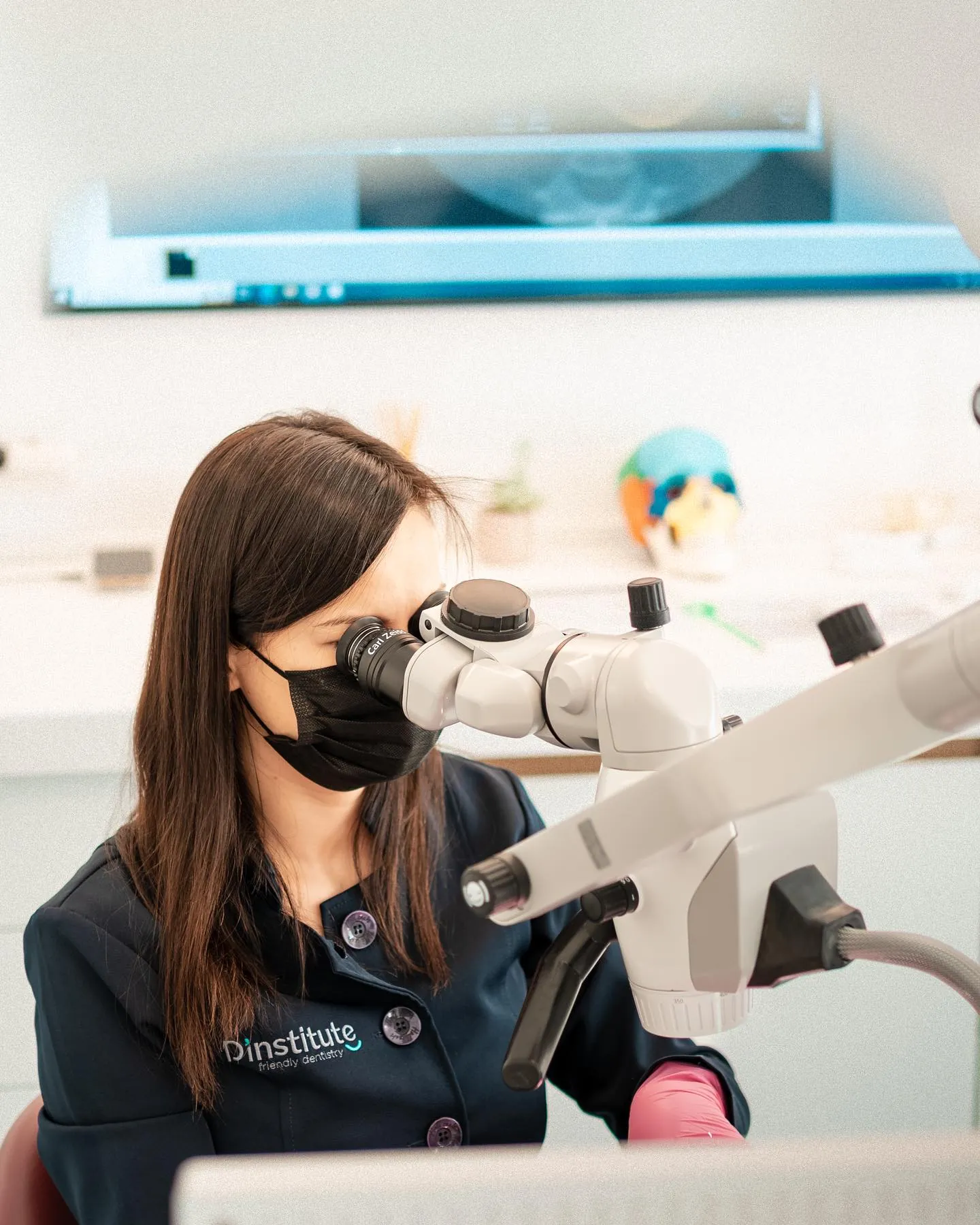
At D'Institute in Cluj-Napoca, root canal treatment is done under the microscope by Dr. Adriana Morar, an endodontics specialist. It usually takes one or two visits and keeps the tooth instead of having it taken out.
When you need root canal treatment
Root canal treatment is needed when infection or inflammation has reached the pulp, the soft tissue inside the tooth that holds the nerves and blood vessels. This happens after deep decay, a crack or a knock to the tooth.
The usual signs:
- pain that comes on by itself, especially at night;
- sensitivity to hot or cold that doesn't go away after a few seconds;
- pain when you bite on the tooth;
- swelling or a small spot on the gum, next to the tooth;
- a tooth that has turned darker.
Sometimes the tooth doesn't hurt at all, and the infection at the tip of the root turns up on an X-ray with no other sign.
Many people put off root canal treatment for years, because they dread the appointment or because they are sure the tooth can't be saved anyway. Meanwhile, the infection keeps spreading. The sooner the tooth is seen, the more of it there is left to keep.
How it works, step by step
- The X-ray and diagnosis.
On the X-ray, the dentist sees the shape of the roots and whether there is infection at the tip.
- Local anaesthetic.
The area is numbed before we start.
- Isolating the tooth.
A rubber sheet (a dental dam) is placed over the tooth so saliva and bacteria can't get into the canals.
- Cleaning the canals.
Under the microscope, the dentist removes the infected pulp and cleans each canal along its full length.
- Disinfection.
The canals are rinsed with solutions that kill bacteria. If the infection is extensive, a medicated dressing is placed in the tooth between visits.
- Sealing.
The canals are filled and sealed so bacteria can't get back in.
- Restoring the tooth.
The tooth is closed with a filling and is often covered afterwards with a crown or an endocrown.
What the dentist sees under the microscope, and why it matters
The canals of a tooth are as thin as a hair and don't always run straight. A molar usually has three or four canals, sometimes more. The microscope magnifies the area several times and lights it up, so the dentist can see extra canals, fine cracks and bits of tissue that the naked eye misses. A missed canal can keep the infection in the tooth.
How long it takes and how many visits
Root canal treatment usually takes one or two visits, each lasting 60-120 minutes. A front tooth with a single canal can be finished in one visit. A molar with a large infection usually needs two visits, with medication placed in the tooth between them.
What you feel during and after treatment
The treatment is done under local anaesthetic. You feel pressure and vibration. The dentist checks in with you as they work and stops whenever you need. The appointment is long, so you can ask for a break at any time to rest your jaw.
After treatment, the tooth may be tender when you bite for a few days. The dentist will tell you which painkiller you can take, if you need one. If the tenderness gets worse or you notice swelling, call the clinic.
Root canal retreatment
Retreatment means redoing an old root canal treatment. It is needed when a tooth that has had root canal treatment becomes infected again: the canals weren't cleaned along their full length, a canal was missed, or the filling over them let bacteria in.
The dentist removes the old material from the canals, cleans and disinfects them again, then seals them. Under the microscope, the dentist can see canals that were missed and any broken instruments left in a canal from the earlier treatment. Retreatment usually takes longer than a first root canal treatment, and the number of visits depends on what the canals look like and whether there is infection. When the infection persists, more visits may be needed, with medication placed in the canal between them.
Root canal or extraction?
An infected tooth can be kept with root canal treatment when the root is intact, there is bone around it and enough of the tooth is left to rebuild it. When the root has a vertical crack or the tooth is broken down below the gum, extraction is the remaining option.
If you have been advised to have an infected tooth taken out, it is worth getting a second opinion first. An extraction can't be undone.
What happens after root canal treatment
A tooth that has had root canal treatment is more fragile than a living one, especially if there is little of it left. For back teeth, the dentist usually recommends a crown or an endocrown, which protects the tooth from breaking when you chew. They are made in the laboratory at the clinic.
How much root canal treatment under the microscope costs
The price depends on the tooth (front tooth, premolar, molar) and on whether it is a first treatment or a retreatment. All the prices, with what each one includes, are in the price list.
See the prices for endodonticsWho carries out root canal treatment
Dr. Adriana Morar, endodontics specialist. She graduated from the Faculty of Dental Medicine at the Iuliu Hațieganu University of Medicine and Pharmacy in Cluj-Napoca in 2017 and completed her residency in endodontics in 2021.
Cases
[FROM THE CLINIC]
Frequently asked questions
How much does root canal treatment under the microscope cost?
The price varies with the tooth: a front tooth costs less than a molar, and a retreatment costs more than a first treatment. All the amounts are in the D'Institute price list, under Endodontics.
How long does root canal treatment under the microscope take?
Usually one or two visits, each lasting 60-120 minutes. Molars with a large infection usually need two visits.
Does root canal treatment hurt?
The treatment is done under local anaesthetic, and the dentist checks how you are feeling throughout. Afterwards, the tooth may be tender when you bite for a few days.
What does root canal treatment on a molar involve?
It means cleaning and sealing the canals in the roots of a molar, which usually has three or four canals. It takes longer than on a front tooth and is usually done in two visits.
What is endodontic retreatment and when is it needed?
Retreatment means redoing an old root canal treatment when the tooth has become infected again. The dentist removes the old material, cleans the canals again and seals them.
Can root canal treatment save a tooth instead of an extraction?
Yes, when the root is intact and has bone around it. If the root has a vertical crack, the tooth can no longer be kept.
Who does root canal treatment at D'Institute?
Dr. Adriana Morar, an endodontics specialist, who works under the microscope.
Text reviewed by Dr. Adriana Morar, endodontics specialistUpdated October 2026